How to Go Viral on Instagram
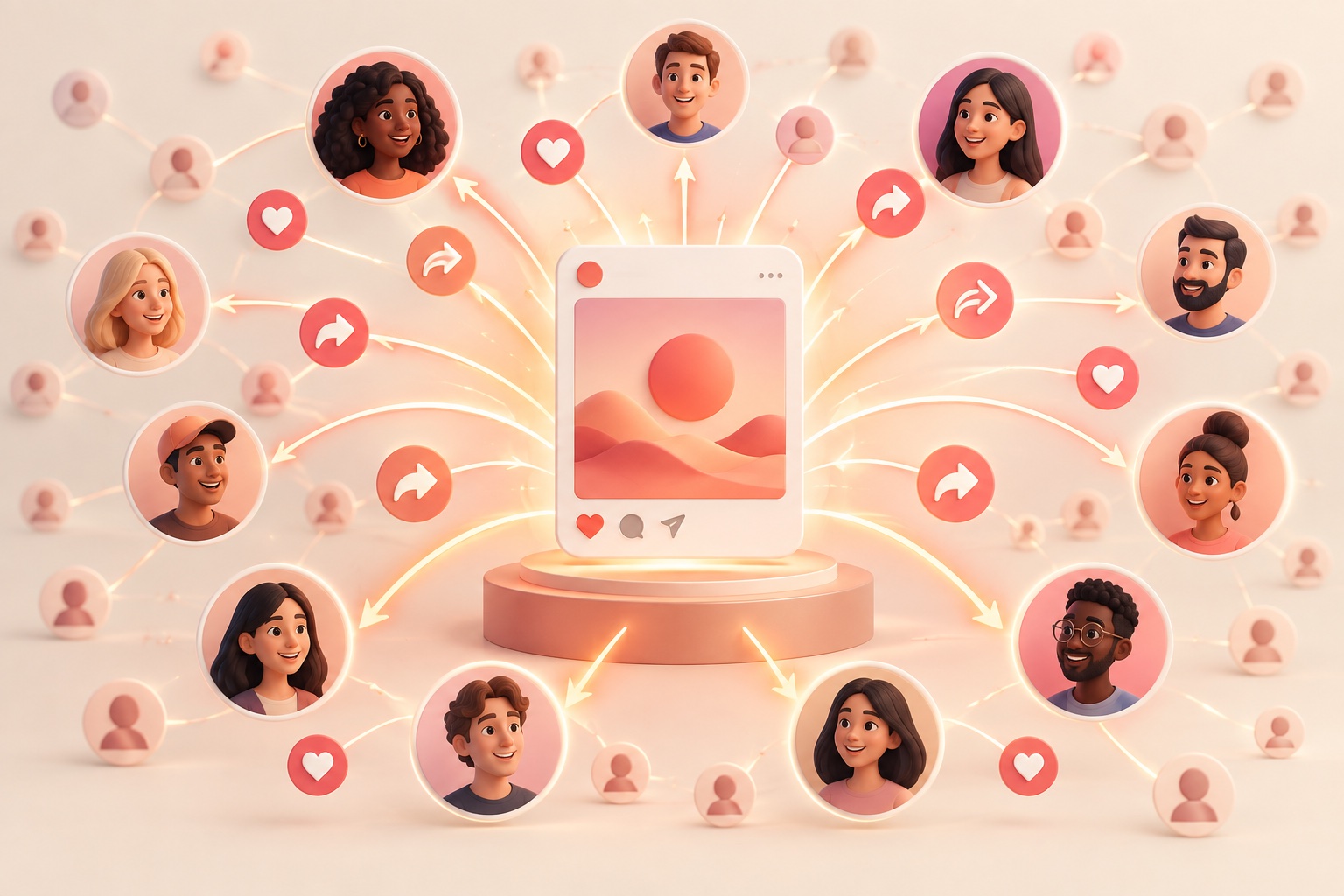
Virality on Instagram is a rapid, unusually large expansion of distribution relative to an account's normal performance. It may come through Reels recommendations, Explore, Feed, reposts, collaborations, private sends, search, or attention outside Instagram. Nobody can guarantee it. The useful goal is to increase the probability and readiness of breakout distribution while protecting accuracy, rights, security, and the audience experience.
Define virality before chasing it
A viral result is relative. Fifty thousand qualified views can transform a specialist account, while the same number may be ordinary for a large entertainer. Compare the post with your recent median reach, views, sharing, follower acquisition, and non-follower distribution.
Decide what success beyond views means: awareness, followers, subscribers, enquiries, sales, event attendance, donations, downloads, or cultural conversation. A post can be widely watched and still fail if it attracts the wrong audience or creates no meaningful next step.
Expect uneven results. Recommendation systems predict what individuals may value using many signals and feedback; there is no single public score that creators can optimize into guaranteed reach. Build a portfolio of strong attempts instead of tying the strategy to one upload.
Set ethical boundaries before attention arrives. Define claims you will not exaggerate, people you will not expose, topics that require expert review, and offers you cannot fulfill at scale. Virality magnifies errors as effectively as it magnifies value.
Find a high-propagation idea
Strong viral candidates often combine familiarity with a fresh angle: a common problem shown visually, a surprising but supportable result, an emotionally specific story, a timely explanation, a useful shortcut, a remarkable skill, or an observation people use to express identity.
Mine audience language from repeated questions, objections, saves, shares, search terms, customer interviews, and communities. Look for tension between what people assume and what evidence or experience shows. The idea should remain valuable even if the trend or audio disappears.
Write the share sentence: what would one person say when sending this to another? If no natural sentence appears, sharpen the social function. People share to help, entertain, warn, validate, remember, coordinate, or say something about themselves and their relationships.
Verify factual claims and permissions. Use primary sources, label estimates, distinguish experience from universal evidence, and avoid presenting staged or edited material as a real event. A correction after a breakout post rarely reaches everyone who saw the original.
Build a compelling opening and payoff
Show the result, change, conflict, question, or unusual visual in the opening moment. Use plain language that the intended audience recognizes. Long introductions, logo animations, vague teasers, and unnecessary backstory give viewers time to leave before the value appears.
Match the hook to the actual payoff. If the opening promises three tested steps, deliver three specific steps. If it presents a dramatic result, explain conditions and limitations. Satisfying expectations supports trust, retention, and sharing.
Create escalating value through examples, evidence, demonstration, or narrative turns. Do not stretch a ten-second insight into a minute solely to increase watch time. The best length is the shortest version that preserves understanding and emotional effect.
End with resolution and a relevant next action. A loop may be elegant, but a deliberately confusing ending can produce empty replays. Invite viewers to save, discuss, follow, or visit only when that action genuinely extends the value.
Engineer retention without gimmicks
Use clear captions, legible visual hierarchy, clean audio, and changes that follow the information. Cut repetition and dead air. Keep important text away from interface controls and preview the export on different phone sizes when possible.
For educational content, alternate explanation with proof: show the setting, result, source, screen, material, or example. For stories, establish who wants what, what changed, and why it matters. Confusion is not suspense.
Use pattern changes sparingly. Zooms, effects, sound cues, and rapid cuts can renew attention, but excessive stimulation competes with the idea and reduces accessibility. Let the subject determine the editing rhythm.
Review retention as a curve rather than one average. Note where people leave, replay, or stay. Then inspect the exact sentence, visual, transition, or delay at that moment and form a testable hypothesis for the next version.
Increase recommendation and sharing readiness
Publish original public content in the appropriate format, with a clean master and rights-cleared audio. Review Account Status and recommendation eligibility. Eligibility allows consideration but never guarantees that Instagram will recommend a post.
Make the topic clear through the spoken content, visuals, caption, profile category, and relevant metadata. A recommendation system and a human viewer both need enough context to identify who may care.
Create for private sends and reposts, not just public likes. Instagram's 2025 product update explained that reposts of public posts and Reels are credited to the original poster and may be recommended to the reposter's followers, creating another legitimate discovery path.
Avoid engagement bait, irrelevant tags, mass comments, bought signals, copied clips, and misleading thumbnails. Artificial activity can distort your learning and violate community expectations; attention gained through disappointment is difficult to convert into trust.
Publish and respond during momentum
Publish when the team can monitor accuracy, rights, moderation, and customer response—not solely at a mythical universal best time. Early audience availability can help conversation, but strong content may continue distributing well beyond the first hours.
Answer substantive questions, pin useful clarification, correct a material error visibly, and remove abusive or dangerous content according to a written moderation policy. Do not manufacture arguments from secondary accounts to create activity.
If demand surges, check the bio, links, inventory, landing-page speed, email capture, support capacity, and account security. Pause claims or offers that cannot be fulfilled. A broken destination wastes the short window of high attention.
Document the trajectory with scheduled Insights snapshots. Capture reach, views, non-follower share, watch behavior, saves, shares, comments, follows, profile actions, and conversions. Avoid refreshing every minute and changing strategy from noise.
Convert a viral post into durable growth
Pin or highlight a start-here resource related to the breakout topic. Publish a follow-up that answers the most common question, adds evidence, or applies the idea in another situation. The goal is to serve new viewers, not repeat the same hook until fatigue.
Check whether the viral audience matches the account's long-term promise. If the topic is adjacent, create a bridge to core content. If it is unrelated, resist rebuilding the entire account around a one-time curiosity spike.
Reach out thoughtfully to relevant journalists, experts, partners, or communities only when you can add context or verification. Keep records of requests and usage permissions; viral content is frequently copied, edited, and impersonated.
Protect the creator or subjects from exposure. Remove visible private information, strengthen login security, define media boundaries, and avoid sharing live locations or personal contact details just because attention is positive today.
Learn from both breakouts and misses
Compare the viral post with five to ten normal posts across topic, first frame, retention, shares per reach, saves, non-follower distribution, publishing context, collaboration, and outside traffic. Correlation can suggest a test, but it does not prove one feature caused the outcome.
Identify transferable principles rather than superficial details. The lesson may be a clearly demonstrated transformation, a precise audience tension, a stronger opening, or exceptional share value—not the shirt color, exact posting minute, or a particular number of hashtags.
Create several responsible variations: a deeper tutorial, opposing case, update, carousel, FAQ, behind-the-scenes explanation, or collaboration. Preserve the reason people cared while adding new value and avoiding duplicate spam.
Return to a stable publishing system after the spike. Virality is a distribution event, not a business model. Long-term results come from useful original work, audience trust, clear offers, owned relationships, and the capacity to repeat quality without harming the creator or community.
Frequently asked questions
How many views count as viral on Instagram?
There is no official universal threshold. Treat virality as an unusually large and rapid result relative to your normal performance and objective.
Can hashtags make a Reel go viral?
Hashtags may add context, but they cannot guarantee distribution. Topic fit, originality, retention, satisfaction, sharing, and recommendation eligibility matter more than a formula.
Should I delete a Reel that does not go viral quickly?
Usually not for ordinary underperformance. Let it collect data; delete or correct content for material errors, rights issues, safety, or policy concerns.
Can I recreate someone else's viral video?
You can respond to an idea or format with your own rights-cleared execution and added value, but copying media or presenting another creator's work as yours creates copyright, trust, and recommendation risks.
Does paid promotion create virality?
Ads can buy distribution under defined settings, but paid reach is not the same as organic viral spread. Evaluate paid and organic results separately.
https://about.fb.com/news/2024/10/best-practices-education-hub-creators-instagram/
https://about.fb.com/news/2023/06/how-ai-ranks-content-on-facebook-and-instagram/
https://www.facebook.com/help/338481628002750
https://www.facebook.com/help/477434105621119?locale=en_GB
https://about.fb.com/news/2025/08/new-instagram-features-help-you-connect/
https://about.fb.com/news/2026/01/2026-ai-drives-performance/
This independent guide is not affiliated with or endorsed by Instagram or Meta.